
Three Ways to Sell Your Car in the UK
When you decide to sell your car, you broadly have three options: sell it privately, part-exchange it at a dealership, or use a car buying service. Each route has genuine advantages and drawbacks, and the right choice depends on your circumstances, your vehicle, and how much time you are willing to invest.
This guide compares all three options honestly, covering realistic timelines, typical costs, and the risks involved with each. No sales pitch — just the facts you need to make a sensible decision.
Selling Privately: Maximum Price, Maximum Effort
How It Works
You list your car on classified platforms such as Autotrader, Facebook Marketplace, Gumtree, or similar sites. Potential buyers contact you to arrange viewings and test drives. You negotiate on price, agree a sale, and handle the paperwork yourself.
Realistic Timeline
Expect the process to take anywhere from one week to several months. Popular, well-priced cars in good condition sell faster. Older vehicles, high-mileage models, and niche cars can sit on listings for weeks without a serious enquiry. You will likely need to manage multiple enquiries, viewings, and potential time-wasters before finding a genuine buyer.
Typical Costs
- Advertising fees: Autotrader packages range from roughly fourteen to forty pounds depending on the listing tier. Facebook Marketplace and Gumtree are free but attract more casual enquiries.
- Preparation: A professional valet costs thirty to one hundred pounds. Minor repairs or an MOT test may be needed to make the car sellable.
- Time: This is the hidden cost. Responding to messages, arranging viewings, and negotiating takes hours across multiple days.
Risks
Private sales carry genuine risks. Payment fraud is a real concern — bank transfer scams, counterfeit banknotes, and bounced cheques all happen. Inviting strangers to your home for test drives carries a safety element. No-shows are common, and some viewers will try aggressive negotiation tactics on your doorstep.
You also have certain legal obligations as a private seller. The car must match your description — misrepresenting its condition, mileage, or history could expose you to a claim under the Consumer Rights Act or the Misrepresentation Act.
When Private Sale Makes Sense
If you have a desirable car in good condition, you are not in a rush, and you are comfortable handling the process yourself, a private sale can deliver the highest price. It works best for vehicles under ten years old with reasonable mileage, a full service history, and a valid MOT.
Part-Exchange at a Dealer: Convenient but Costly
How It Works
You drive your current car to a dealership and trade it in against the price of your next vehicle. The dealer appraises your car, offers a trade-in value, and deducts that amount from the price of the car you are buying. You leave with your new vehicle and the dealer takes your old one.
Realistic Timeline
Part-exchange can be completed in a single visit, though most people spend several hours at the dealership negotiating on both the new car price and the trade-in value. If you are ordering a new car, the part-exchange happens when you collect the new vehicle, which could be weeks or months later.
The Part-Exchange Trade-Off
Dealers need margin. They will offer you less than your car’s market value because they intend to sell it on for a profit or move it through trade channels. The gap between a private sale price and a part-exchange offer is typically ten to twenty-five percent, sometimes more.
However, some dealers roll the part-exchange into the overall deal, offering you a seemingly generous trade-in while adding the difference back onto the new car price. Always check the total transaction value, not just the individual figures.
Costs
There are no direct fees, but the cost is baked into the lower valuation. You will almost certainly receive less than you would selling privately or through a car buying service.
When Part-Exchange Makes Sense
If you are buying a new or used car from a dealership and value convenience above price, part-exchange keeps things simple. You avoid the hassle of selling separately and can complete everything in one place. It also works well if your current car has issues that would make it difficult to sell privately — dealers are more likely to accept vehicles with minor faults because they have trade networks to move them on.
Car Buying Service: Speed and Certainty
How It Works
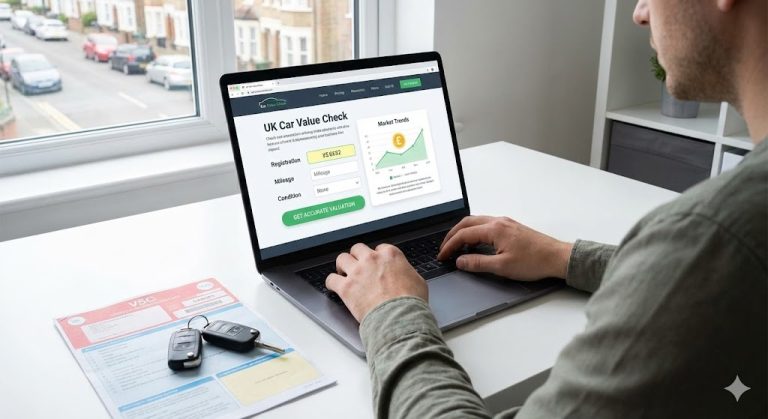
You enter your registration online and receive a valuation. If you accept the offer, the service arranges collection from your location and pays you directly, usually by bank transfer on the same day. There is no advertising, no viewings, and no negotiation.
Realistic Timeline
Most sales are completed within 24 to 48 hours of accepting an offer. Some services, including ours, can arrange same-day collection. The entire process, from entering your registration to receiving payment, can take as little as a few hours.
Costs
Reputable car buying services charge no fees. No listing costs, no collection charges, and no admin deductions. The price you are quoted should be the price you receive. If a service tries to charge you anything, look elsewhere. Read more about selling without fees in our detailed guide.
How Prices Compare
Car buying services typically offer more than part-exchange but slightly less than a private sale. The difference is narrower than many people expect, particularly once you factor in advertising costs, preparation expenses, and the time investment of selling privately.
When a Car Buying Service Makes Sense
This option works well when you need to sell quickly, want to avoid the risks of private sales, have a vehicle that is hard to sell privately (non-runner, no MOT, high mileage, damage), or simply value your time. It is also the simplest option if your car is on finance, as the service handles the settlement directly. Find out more about how our process works.
Side-by-Side Comparison
| Factor | Private Sale | Part-Exchange | Car Buying Service |
|---|---|---|---|
| Typical price achieved | Highest | Lowest | Middle |
| Time to complete | 1 week to 3+ months | Same day (if buying) | 24 to 48 hours |
| Direct costs | Advertising plus preparation | None (hidden in deal) | None |
| Effort required | High | Low | Very low |
| Payment risk | Moderate to high | None | None |
| Accepts damaged or non-running | Difficult | Sometimes | Yes |
| Handles finance settlement | No (you must settle first) | Yes | Yes |
| Collection included | No | No (you drive to dealer) | Yes, free |
Real-World Scenarios
Scenario 1: A three-year-old hatchback in good condition
Private sale will likely deliver the best return here. The car is desirable, easy to sell, and will attract plenty of enquiries. Budget one to three weeks and forty to seventy pounds in listing and preparation costs. If you need the money quickly or cannot manage the viewings, a car buying service is a solid alternative with minimal loss.
Scenario 2: A ten-year-old diesel with high mileage
This is harder to sell privately. Diesel demand has softened, and high-mileage cars attract bargain hunters who negotiate aggressively. Part-exchange offers will be low. A car buying service removes the uncertainty and typically offers a fair market price without the prolonged wait.
Scenario 3: A non-runner or MOT failure
Private sale is impractical — you cannot demonstrate the car, test drives are impossible, and buyers are wary. Part-exchange is unlikely unless the dealer is feeling generous. A car buying service that specialises in vehicles in any condition is your best option. We buy MOT failures and non-runners every day.
Tips for Getting the Best Deal Whichever Route You Choose
- Get multiple valuations. Whether you are selling privately or considering a service, knowing your car’s market value gives you negotiating power.
- Be honest about condition. Misrepresenting faults or history leads to renegotiation, complaints, or worse. Accuracy upfront protects you and builds trust.
- Have your documents ready. V5C, MOT history, service records, and keys. Missing paperwork slows everything down and can reduce offers.
- Time it right. Spring and early summer tend to be stronger for private sales. If timing is flexible, a few weeks can make a difference. Read our guide on getting the best price for more detailed strategies.
- Read customer reviews before choosing any car buying service. Look for consistent feedback on price accuracy, collection punctuality, and payment speed.
Frequently Asked Questions
Which option gets the highest price?
A private sale will typically deliver the highest price, but it comes with the most effort, risk, and time investment. Once you account for advertising costs, preparation, and the hours spent on enquiries and viewings, the net difference between a private sale and a reputable car buying service is often smaller than people expect.
Can I combine part-exchange with a car buying service?
Yes. Some sellers get a valuation from a car buying service and use it as leverage when negotiating a part-exchange at a dealership. If the dealer will not match or beat the offer, you sell to the car buying service instead. This approach gives you a guaranteed fallback price.
What if my car is on finance?
You cannot sell privately until the finance is settled. Both dealerships and car buying services can handle the settlement for you. We settle outstanding finance directly with your lender, deduct it from the agreed price, and pay you any remaining equity.
How do I know if a car buying service is trustworthy?
Check independent reviews, look for a clear no-fees policy, and confirm that they offer same-day payment by bank transfer. Avoid services that change the price at collection, charge admin fees, or pay by cheque.
Is a car buying service the same as a scrapyard?
No. A scrapyard pays for the metal value of a vehicle. A car buying service values the entire vehicle, including parts, components, and resale potential. Our offers are almost always higher than scrap value, even for non-runners.
Ready to See What Your Car Is Worth?
Whatever route you choose, knowing your car’s current market value is the essential first step. Our valuation is free, takes seconds, and comes with no obligation. If the price works for you, we can collect and pay within 24 hours. If not, you have lost nothing.